
Frequently Asked Questions
About the project
Please click on the questions below to see the answers
Cultaca Limited is the promoter of the proposed project. The company brings together complementary experience in originating and progressing energy infrastructure projects, alongside established expertise in the development, operation and optimisation of power generation assets.
Through those involved in the company, Cultaca combines local development knowledge and entrepreneurial capability with broader energy-market, engineering and operational experience. This provides the project with a strong foundation across its development lifecycle, from site identification, design and consenting through to delivery and long-term operation.
Cultaca’s objective is to progress well-designed and responsibly developed energy infrastructure that can contribute to security of electricity supply and support Ireland’s transition to an increasingly renewable electricity system. The company is committed to open engagement with local communities, public representatives, statutory bodies and other stakeholders as the project develops.
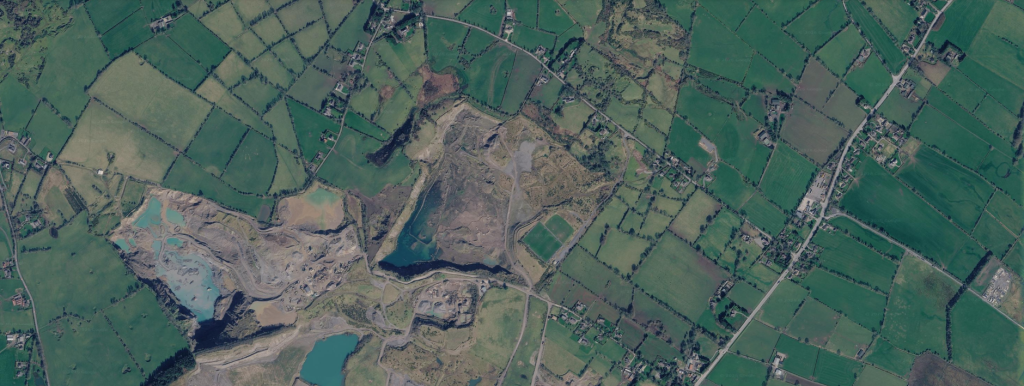
Cultaca Limited are planning to develop a new gas-powered peaker plant at a location within the extracted Red Bog Quarry site, Crosschapel, County Kildare. The proposed Crosschapel Flexible Generation Project is being developed in response to the government’s call for flexible generation to provide security of supply during periods of peak demand.
The Crosschapel Flexible Generation Project will consist of an Open Cycle Gas Turbine (OCGT), with a total output capacity of up to 385MW. The peaker plant will be primarily fuelled by natural gas supplied from the Gas Networks Ireland gas transmission network. Electrical power will be exported from the plant’s main transformer to the existing Dunnstown 400kV substation, operated by EirGrid (the Transmission System Operator), which is approximately 11.5km to the south west of the site.
The proposed Crosschapel Flexible Generation Project will provide flexible power generation and stability to the national grid, which is recognised as a key part of the energy transition to net zero and energy security. As the availability of renewable electricity (such as solar or wind) can be intermittent in nature, back-up conventional generation is needed to ensure stability and security of supply and to support the growth of renewable generation. The proposed Crosschapel Flexible Generation Project will help bridge this gap, by ramping up quickly to meet peak demand during times of low renewable energy availability to the grid. The flexible nature of the plant means that it can be turned on and off to react to these fluctuations in renewable generation.
The power station is designed to be adaptable to biomethane or hydrogen blend fuel in the future.
Flexible energy generation is the ability of power-generating facilities to quickly adjust output to suit demand, ensuring the grid has available power and stability at all times. As the availability of renewable electricity (such as solar or wind) can be intermittent in nature, flexible gas generation is needed to ensure grid stability and security of supply, and to support the growth of renewable generation through proven technologies that are immediately available. The Irish Government has deemed this a national priority as highlighted in its Policy Statement on Security of Electricity Supply, November 2021.
The Climate Action Plan 2025 sets a key national target to have at least 2GW of new flexible gas generation by 2030 to deliver a flexible system to support renewables and demand. “Rapid delivery of flexible gas generation is needed at scale and in a timeframe to replace emissions from coal and oil generation as soon as possible to reduce impacts on the carbon budgets.”
The proposed Crosschapel Flexible Generation Project will have the ability to ramp up quickly to meet peak demand. The flexible nature of the plant means that it can be turned on and off to react to fluctuations in renewable generation.
The proposed Crosschapel Flexible Generation Project will provide the following benefits:
- Grid stability and security of supply: providing quick start power to react to peaks in demand during periods of low renewable energy availability.
- Quick start-up: capability to move from a standing start to full power generation rapidly.
- Flexibility: the new plant can be switched on or off to balance the grid when demand is high, or generation is low.
- Supports Ireland’s energy transition: the new plant will act as a bridge technology ensuring a stable transition to more renewable generation without compromising reliability.
- Community benefits: Cultaca Limited will establish a Community Benefit Fund as part of the project to support local community projects and initiatives that benefit the area.
- Economic benefits: generates employment during construction and operation, and also attracts investment through the provision of a secure and reliable grid.
Location
Please click on the questions below to see the answers
The subject site is located within the townland of Red Bog, Crosschapel, Co. Kildare. The site is part of an extracted quarry site operated by Roadstone Limited (an operating company of CRH PLC).
The site is located approx. 2km north of Blessington Town in Co. Wicklow, approx. 3.5km south-east of the villages of Eadestown and Rathmore in Co, Kildare and approx. 4km west of Kilbride village in Co. Wicklow.
A comprehensive site selection process was undertaken to identify a suitable site for the Peaker Plant. Cultaca Limited then assessed the feasibility of the various sites and found many were unsuitable or unavailable. The site for the Peaker Plant was selected primarily based on its located within a former extracted quarry site which would screen it from its surroundings, its proximity to the existing Gas Networks Ireland gas transmission line, the existing Dunnstown 400kv substation, and the availability of a suitable area of land. A detailed consideration of the site, and alternative sites, has been included in the Environmental Impact Assessment Report (EIAR) and submitted alongside the Strategic Infrastructure Development (SID) application to An Coimisiún Pleanála.
The proposals are to develop a gas-powered peaker plant with a capacity of up to 385MW depending on the turbine technology that is used. This has been the basis of our meetings with prescribed bodies, local authorities and An Coimisiún Pleanála throughout 2026. There are no plans to expand the peaker plant.
Plant Operations
Please click on the questions below to see the answers
As we move towards an electricity grid that is increasingly based on renewable energy, peaker plants will be required to ensure security of supply. However, the availability of renewable electricity, such as solar or wind, can be intermittent in nature and these generation sources may not always provide the power necessary to meet peak demand on the grid. During these periods, EirGrid may request peaker plants like Red Bog to come online to make up the shortfall and ensure the grid has sufficient power to meet demand. However, as peaker plants are more expensive to run than other alternatives they are typically the last line of defence, dispatched only when absolutely required for stability and to keep the lights on.
The Transmission System Operator (EirGrid) will determine when the Peaker Plant is required to come online to ensure the grid has sufficient stability to meet demand. The flexible nature of peaker plants means they can be turned on and off quickly to react to peak demand. However, as peaker plants are more expensive to run, compared to other generation sources, they are typically the last line of defence, dispatched only when absolutely necessary to maintain stability and ‘keep the lights on’, hence the limited expected operational hours.
The primary fuel source for the Crosschapel Flexible Generation Project will be natural gas, which will be supplied from the Gas Networks Ireland gas transmission pipeline. The power station is designed to be adaptable to biomethane or hydrogen blend fuel in the future, if and when it becomes available.
In order to comply with Commission for Regulation for Utilities (CRU) requirements to ensure security of energy supply, low sulphur diesel will be stored as a backup fuel. However, operation on diesel would only occur in highly irregular circumstances such as a national interruption to gas supply.
Natural gas will be supplied to the peaker plant from the existing Gas Networks Ireland gas transmission pipeline. As part of the Overall Project, an Above Ground Installation (AGI) will be constructed on site close to the gas transmission pipeline. AGIs contain equipment for filtering, metering, and controlling the gas supply conditions.
In order to comply with Commission for Regulation for Utilities (CRU) requirements to ensure security of energy supply, low sulphur diesel will be stored as a backup fuel. However, operation on diesel would only occur in highly irregular circumstances such as a national interruption to gas supply.
The Crosschapel Flexible Generation Project will include two diesel storage tanks with sufficient capacity for at least 3 days of continuous running at full load, which is mandated by EirGrid as a condition of our connection agreement.
The primary fuel source for the Crosschapel Flexible Generation Project will be natural gas, which will be supplied from the Gas Networks Ireland gas transmission pipeline that runs through the south of the site. During normal operations, when the peaker plant is requested to come online by EirGrid, it will be fuelled by natural gas.
In order to comply with Commission for Regulation for Utilities (CRU) requirements to ensure security of energy supply, low sulphur diesel will be stored as a backup fuel only. However, operation on diesel would only occur in highly irregular circumstances such as a national interruption to gas supply.
Other than occasional diesel system testing for short periods, the use of diesel fuel is therefore expected to be rare with most years having no requirement other than mandatory testing.
As part of routine maintenance, mandatory testing on the diesel backup fuel is anticipated to occur for up to 18 hours per annum in accordance with EirGrid (the Transmission System Operator) Grid Code. This testing involves starting up the gas turbine on diesel fuel for a brief period sufficient to confirm this backup function remains reliable.
To maintain the quality of the diesel it will be treated with a biocide at regular intervals to prevent the growth of organic matter such as bacteria, fungi, or algae. In addition, the diesel will be passed through a polishing system which will remove any dead organic matter and entrained moisture before being returned to the storage tanks for use.
This process can be carried out indefinitely and means that the there is no need to either “burn off” the diesel or to dispose of it another manner. Should there ever be a need to remove stored diesel from site, this will be carried out in a controlled manner using tankers to transport the diesel off site to a suitable treatment facility.
Electricity Grid Connection
Please click on the questions below to see the answers
Electrical power will be exported from the plant’s main transformer to the existing Dunnstown 400kV substation, operated by EirGrid, the electricity Transmission System Operator (TSO). The preferred option is to locate an underground cable in the public road between the Crosschapel Flexible Generation Project site and the Dunnstown 400kV substation. This underground cable would be 11.5km in total length.
We are working closely with EirGrid regarding the grid connection, which will be subject to both planning approval by An Coimisiún Pleanála, and approval by EirGrid as part of the grid connection offer for the Crosschapel Flexible Generation Project.
Air Quality
Please click on the questions below to see the answers
Air quality is a key consideration in the project’s design and environmental assessment. Detailed studies are being undertaken to assess existing conditions and model the potential effects of emissions from the proposed plant on nearby residents and the wider environment. The assessment will consider the plant’s proposed operating profile and applicable air quality standards, with measures incorporated into the design where necessary to avoid, minimise or mitigate potential effects. The findings will be set out in the Environmental Impact Assessment Report submitted with the planning application.
The peaker plant will be required to operate under an Industrial Emissions Licence issued by the Environmental Protection Agency (EPA). Emissions from the plant’s stack will be monitored using a Continuous Emissions Monitoring System to confirm that the facility remains within the limits set by the EPA. Monitoring information will be recorded and reported in accordance with the conditions of the licence, with the EPA responsible for overseeing and enforcing compliance.
Light & Noise
Please click on the questions below to see the answers
The potential effects of operational noise and lighting will be assessed as part of the Environmental Impact Assessment Report. With regard to noise and vibrations, a Noise Impact Assessment Report will detail all potential for noise and vibration during the operation and construction phases and proposed mitigation measures. The plant will be designed to comply with the relevant noise limits at nearby homes, with measures such as acoustic enclosures, silencers and other noise-control features incorporated where required. Operational lighting will be limited to what is necessary for the safe and secure running of the facility and will be carefully positioned and directed to minimise glare and light spill beyond the site. Noise and lighting controls will also be reviewed as part of the project’s detailed design and regulatory approval process.
Construction Impacts
Please click on the questions below to see the answers
The potential effects of construction, including traffic, noise, dust and activity on local roads, will be assessed as part of the Environmental Impact Assessment Report. A Traffic and Transport Assessment and Construction Traffic Management Plan will be prepared for the planning application, including consideration of the existing quarry access, visibility, haul routes, road safety audit matters and consultation requirements with Transport Infrastructure Ireland where relevant. These reports are expected to include agreed construction hours, designated access and delivery routes, traffic-management arrangements, dust suppression, noise controls, wheel washing and regular monitoring. Local residents and other stakeholders will be kept informed of significant construction activities, and a contact point will be provided so that any concerns can be raised and addressed promptly.
Community Engagement
Please click on the questions below to see the answers
We place significant emphasis on community engagement and we’ll continue to provide information about the project as it moves through different stages of development.
We are planning to hold a public information event on 19 October 2026 in the Coimin Centre, Blessington, to provide an update on the project in advance of the submission of the Strategic Infrastructure Development (SID) applications to An Coimisiún Pleanála.
We are also in the process of establishing a Community Benefit Fund which will make a meaningful, long-term contribution to Crosschapel, Blessington and the wider community as a responsible and supportive new corporate neighbour. In the short term, we have set up a small sponsorship fund to support the valuable work being done by local sports clubs, charitable organisations, and community groups in the area.
Physical copies of the SID Application will be available to view at the following locations:
- The Offices of An Coimisiún Pleanála, 64 Marlborough Street, Dublin 1 D01 V902 (9:15am – 5:30pm, Monday to Friday).
- The Offices of Kildare County Council, Áras Chill Dara, Devoy Park, Naas, Co Kildare. W91 X77F. (9am – 4pm, Monday to Friday).
Project Timescales
Please click on the questions below to see the answers
The project is currently at an early stage of development. Environmental and technical assessments are underway, and project design work is progressing. Public consultation will take place before any planning application is submitted, allowing local communities and stakeholders to learn more about the proposal and provide feedback.
Following completion of the current assessment and engagement work, the next major stage will be the submission of the Strategic Infrastructure Development planning application to An Coimisiún Pleanála. Subject to securing the required planning and other statutory approvals, the project would then move through detailed design, construction and commissioning before becoming operational. The timing of these later stages will depend on the planning process and the necessary grid and regulatory approvals.
Support Ireland’s Energy Future Today
We welcome your feedback on the proposed Crosschapel Flexible Generation Project. Whether you have a question, comment, suggestion or concern, we encourage you to get in touch. All feedback received will be recorded and considered as part of the project’s ongoing development, environmental assessment and planning process.